
Emotional Exhaustion vs Normal Tiredness
Quick answer
Ordinary tiredness usually has a clear cause and improves at least somewhat after sleep, food, a lighter day, or recovery from exertion. Emotional exhaustion is a more persistent loss of emotional capacity: small requests feel disproportionately hard, irritability or numbness increases, and time off does not restore much because the demands, worry, or lack of control are still present.
Emotional exhaustion is a useful description, not a diagnosis. It can occur with occupational burnout, caregiving strain, chronic stress, depression, anxiety, grief, trauma, insomnia, or physical illness. The World Health Organization uses "burn-out" specifically for chronic workplace stress and does not classify it as a medical condition. Exhaustion outside work may be just as serious, but it should not be forced into that label.
If you have persistent sadness or loss of interest, major changes in sleep or appetite, hopelessness, inability to function, or thoughts of death or self-harm, seek professional help. Fatigue lasting weeks also deserves medical review rather than an assumption that it is emotional.
Normal Tiredness and Emotional Exhaustion
| Question | Ordinary tiredness | Emotional exhaustion |
|---|---|---|
| What stands out? | Sleepiness, low physical or mental energy | Feeling empty, detached, overwhelmed, or unable to keep giving |
| Is there a clear cause? | Often a late night, hard shift, travel, exercise, or illness | Often prolonged demand, emotional labor, low control, conflict, or caregiving |
| Does rest help? | Usually at least partly | Often only briefly or very little |
| What happens to mood? | Patience may be lower, but interest returns with recovery | Irritability, dread, numbness, cynicism, or loss of interest may persist |
| What happens to function? | Tasks feel harder until you recover | Routine tasks, decisions, and contact with others may feel unmanageable |
The dividing line is not one bad weekend. Look at duration, recovery, and effect on daily life.
Four Conditions That Can Look Similar
Occupational burnout
WHO describes burnout through exhaustion, greater mental distance or cynicism toward work, and reduced professional efficacy. It is tied to the work context. Excessive workload, long or inflexible hours, low control, poor support, harassment, and job insecurity are workplace risks. A breathing exercise may ease arousal, but it does not correct unsafe staffing or impossible demands.
Depression
Depression can include fatigue, irritability, withdrawal, trouble concentrating, sleep or appetite changes, and loss of interest. The important clues are persistence, breadth, and impairment. If emptiness follows you across work, home, relationships, and activities you usually enjoy, do not dismiss it as "just burnout." A clinician can assess mood and rule out medical or medication-related causes.
Sleep loss or a sleep disorder
Several short nights can reduce patience and emotional regulation. Sleep apnea can cause unrefreshing sleep, daytime tiredness, concentration problems, and mood changes, sometimes without the person knowing that breathing repeatedly stops. Loud snoring, gasping, morning headaches, or severe daytime sleepiness deserve evaluation.
Medical fatigue
Anemia, thyroid disease, infection, diabetes, heart, lung, kidney, or liver disease, chronic pain, medication effects, and other conditions can cause fatigue. Emotional strain and a physical cause can exist together. New weakness, unintentional weight change, fever, breathlessness, bleeding, or progressive symptoms should shift the plan toward medical assessment.
Why a Weekend May Not Fix It
Rest matters, but it cannot solve a demand that restarts unchanged on Monday. A person may take a day off while continuing to monitor messages, anticipate conflict, carry the full caregiving load, or feel guilty for stopping. The calendar says "rest"; the brain still expects responsibility.
Another problem is recovery debt. Sleep, meals, movement, medical appointments, and social contact may have been squeezed for months. One good night helps, but it cannot reverse every neglected need at once.
Finally, exhaustion often reduces the ability to make changes. Decision-making feels heavy, so the person chooses the easiest immediate option, then blames themselves for not redesigning life. That is why the first plan should reduce complexity.
A Seven-Day Capacity Check
Once each evening, record:
- energy on waking and in the evening;
- sleep opportunity and whether sleep felt restorative;
- the demand that used the most emotional effort;
- moments of dread, numbness, irritability, or loss of interest;
- caffeine, alcohol, or other substances used to push through or switch off;
- one task you avoided because capacity felt too low; and
- any physical symptom or medication change.
Do not use the log to grade your toughness. Use it to identify whether the problem is sleep, one setting, every part of life, or a physical symptom that needs evaluation.
What to Change First
Reduce one real demand
Choose one task to delay, delegate, simplify, or decline. At work, ask which deadline or responsibility has priority rather than silently accepting two incompatible demands. In caregiving, ask for a specific shift, meal, transport task, or appointment rather than a vague offer of help.
Protect a minimum recovery floor
Set a realistic floor for sleep opportunity, regular meals, basic hygiene, medication adherence, and brief movement. This is not an optimization project. It is the minimum needed to stop borrowing from tomorrow.
Separate rest from avoidance
Rest should leave some room for recovery, while avoidance often leaves the feared task growing in the background. Pick a short period when you are genuinely off duty, then define the next small action for the unresolved task. That lets the brain stop rehearsing everything at once.
Restore contact without performing
Choose someone with whom you do not need to appear productive or cheerful. Ask for listening, practical help, or quiet company. If all social contact feels draining, keep it short and specific rather than disappearing completely.
Address the system, not only the individual
For work-related exhaustion, document workload, hours, role conflict, staffing, harassment, or lack of control. Use a manager, occupational health service, union, or human resources channel where safe and appropriate. Individual resilience training cannot substitute for organizational change.
For a deeper look at persistent overload, read Why Rest Does Not Fix Burnout. If physical symptoms dominate, see Why Chronic Stress Can Make You Feel Sick.
When to Seek Help
Talk with a healthcare or mental health professional when exhaustion lasts more than a few weeks, spreads across settings, interferes with basic responsibilities, or comes with persistent low mood, anxiety, panic, substance use, or loss of interest. A primary care visit can also review sleep, medications, anemia, thyroid disease, infection, and other physical causes.
Seek urgent help if you may harm yourself or someone else, cannot keep yourself safe, become confused, faint, develop severe chest pain or breathing difficulty, or have a sudden neurological symptom. Do not wait for a vacation to see whether a dangerous symptom improves.
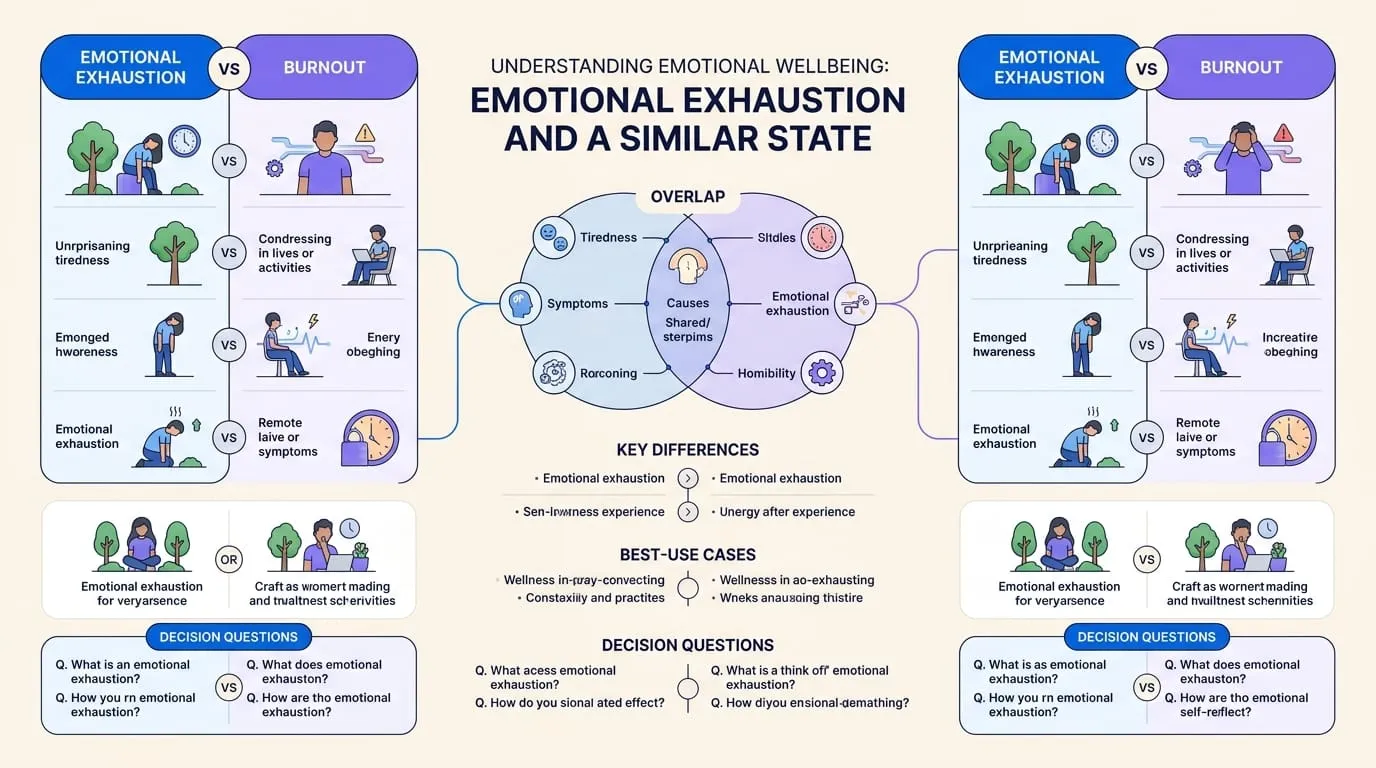
Decision Snapshot
| Question | Emotional Exhaustion | Normal Tiredness |
|---|---|---|
| Best starting point | Fits when its defining pattern is repeated and clear. | Fits when the alternative pattern is repeated and clear. |
| Main limitation | One clue is rarely enough on its own. | One clue is rarely enough on its own. |
| Practical use | Compare the full pattern, cost, tolerance, and goal. | Compare the full pattern, cost, tolerance, and goal. |
Related Tools and Guides
- Try the Stress Level Check In
- Stress vs Anxiety: What’s the Difference?
- What to Do When Anxiety Spikes Suddenly
- Why Does Chronic Stress Make You Feel Sick?
- Cortisol and Stress: Why Your Body Feels Wired
- Overthinking at Night: Why It Gets Worse in Bed
Medical Disclaimer
This article is for general education. "Emotional exhaustion" and "burnout" should not be used to self-diagnose depression, a sleep disorder, or a physical illness. A qualified professional should assess persistent, severe, or unexplained symptoms.
Sources
Continue with a focused next step
Move from understanding this topic to one practical action, goal, or supporting guide.
Related guide
Stress vs Anxiety: What’s the Difference?
Is it external stress overload or an overactive internal alarm? Learn the key differences between stress and anxiety, debunk myths, and calm your mind.
Read guideRelated guide
What to Do When Anxiety Spikes Suddenly
Hit by a sudden surge of anxiety or chest tightness? Learn how the fight-or-flight response escalates panic and follow a 10-minute grounding plan.
Read guideRelated guide
Why Does Chronic Stress Make You Feel Sick?
Experiencing unexplained physical symptoms from constant stress? Discover how allostatic load wears down immunity and follow 4 steps to break the cycle.
Read guideResearch & transparency
We explain the evidence context, keep recommendations proportional, and identify uncertainty where it matters.
When to seek professional support
This page is educational and cannot diagnose a condition. Seek qualified care for severe, persistent, or worsening symptoms.
- Symptoms are severe, sudden, or worsening
- The concern persists despite reasonable self-care
- You are pregnant, taking medication, or managing a condition