
What Is the Gut Microbiome? A Beginner’s Guide
Quick answer
The gut microbiome is the community of microorganisms living in the digestive tract, along with their genes and metabolic activity. It includes bacteria, viruses, fungi, and other microbes. Most people hear about it through digestion, but researchers also study its links with immunity, metabolism, inflammation, and the gut-brain axis.
The important word is "links." A stool test or symptom pattern cannot diagnose your microbiome as good or bad in a simple way. The science is real, but everyday interpretation is still limited. For most people, practical first steps are not exotic: eat a varied, fiber-rich diet, include fermented foods if tolerated, sleep enough, move regularly, manage stress, and get medical help for persistent or warning symptoms.
What the gut microbiome includes
Your digestive tract is not sterile. It contains a large microbial ecosystem that changes along the mouth, stomach, small intestine, and colon. The colon contains the densest community because it has more material for microbes to ferment and a slower transit environment.
Scientists often use related terms:
- Microbiota: the microorganisms themselves
- Microbiome: the microorganisms plus their genes, products, and surrounding ecosystem
- Dysbiosis: an imprecise term for an altered microbial pattern, usually used in research or clinical discussion
It is tempting to treat the microbiome like a scorecard. More of one organism equals good, less of another equals bad. Real life is messier. The same microbe can behave differently depending on diet, location, immune status, medications, and the rest of the ecosystem.
Why researchers care about it
The Human Microbiome Project helped map microbial communities in and on healthy people and made data available for researchers. Since then, microbiome research has grown quickly. NIH programs now study how gut microbes interact with nutrition, barrier function, immunity, bile acids, pathogens, and the gut-brain axis.
Several functions matter for everyday health:
- Fermenting fibers and resistant starch into short-chain fatty acids
- Helping train and communicate with the immune system
- Interacting with bile acids and nutrient metabolism
- Competing with some pathogens for space and resources
- Producing metabolites that may affect gut movement and signaling
These are not guarantees that changing the microbiome will treat a symptom. They are reasons to take diet, medication history, sleep, and stress seriously when thinking about digestive health.
What shapes your microbiome
Diet
Diet is one of the most changeable inputs. A diet with varied plants gives microbes different fibers and polyphenols to work with. Low-fiber, highly processed eating patterns may reduce the amount of fermentable material reaching the colon.
You do not need a perfect diet. Start by adding foods: oats, beans in small portions, lentils, berries, cooked vegetables, nuts, seeds, herbs, and whole grains. If your gut is sensitive, the right pace matters more than the longest plant list.
Antibiotics and other medicines
Antibiotics can be necessary and sometimes lifesaving, but they can also disturb microbial communities. Other medicines, including acid-suppressing drugs, laxatives, and some metabolic medications, may affect the gut environment too.
Do not stop a prescribed medication because of microbiome concerns. If digestive symptoms start after a medication change, discuss it with the clinician who prescribed it.
Sleep, stress, and movement
The gut is connected to the nervous system and immune system. Stress can change gut motility, sensitivity, appetite, and pain perception. Poor sleep can affect appetite regulation and inflammatory signaling. Movement can support bowel motility and is associated in research with microbial differences, though it is not a standalone treatment for gut disease.
This is why "gut health" is not only a food topic. A person can eat plenty of fiber and still feel awful if sleep is short, stress is high, or constipation has gone untreated.
Infection and inflammation
Gut infections, inflammatory bowel disease, celiac disease, and other medical conditions can change symptoms and microbial patterns. In those cases, lifestyle support may still matter, but it should sit beside proper evaluation and treatment.
Signs your gut may need support
No single symptom proves that your microbiome is unhealthy. Still, these patterns often point to a gut that needs attention:
- Frequent bloating or gas
- Constipation or loose stools
- A new food tolerance problem
- Symptoms after antibiotics
- Stress-related urgency or stomach discomfort
- A diet that is very low in plant foods
- Heavy reliance on ultra-processed foods
Use symptoms as clues, not as a diagnosis. Bloating can come from constipation, swallowing air, IBS, lactose intolerance, SIBO, celiac disease, inflammatory disease, medications, or eating too much fermentable fiber too fast.
What stool microbiome tests can and cannot tell you
Consumer stool tests can identify some organisms or patterns in a sample. They may be interesting, but they rarely give a clear medical action plan for a generally healthy adult. Microbiome science is still developing, and normal varies widely between people.
Be careful with reports that label many foods as forbidden, diagnose "dysbiosis" without clinical context, or sell a supplement plan based mainly on the test. A symptom diary, diet pattern, medication history, and medical evaluation often matter more than a long list of organisms.
If your clinician orders a stool test for infection, inflammation, bleeding, or malabsorption, that is different from a wellness microbiome report. Medical tests answer a specific clinical question.
Practical ways to support a healthier gut environment
Start with actions that have a broad health rationale:
- Add fiber gradually through foods you tolerate
- Rotate plants across the week rather than eating the same few foods
- Include legumes, whole grains, fruits, vegetables, nuts, and seeds as tolerated
- Choose plain yogurt, kefir, or fermented vegetables if they agree with you
- Limit added sugars and highly processed snacks when they crowd out real meals
- Walk or move most days to support bowel rhythm
- Protect sleep and treat chronic stress as a gut factor, not an afterthought
If a food makes symptoms clearly worse, step back. A supportive diet should not require daily pain.
When to seek care
Talk with a healthcare professional if digestive symptoms persist beyond a short-lived trigger, keep recurring, or interfere with eating, work, sleep, or weight. Seek prompt care for blood in stool, black stool, unexplained weight loss, persistent fever, repeated vomiting, severe abdominal pain, dehydration, anemia, difficulty swallowing, or a major bowel habit change, especially after age 50.
Do not use "microbiome imbalance" as a reason to delay evaluation for warning signs.
Bottom line
The gut microbiome is a living ecosystem, not a simple wellness score. It matters because microbes interact with digestion, immunity, metabolism, and gut signaling. The best everyday support is still grounded in basics: varied plant foods, enough fiber and fluids, tolerated fermented foods, regular movement, sleep, stress care, and medical evaluation when symptoms are persistent or severe.
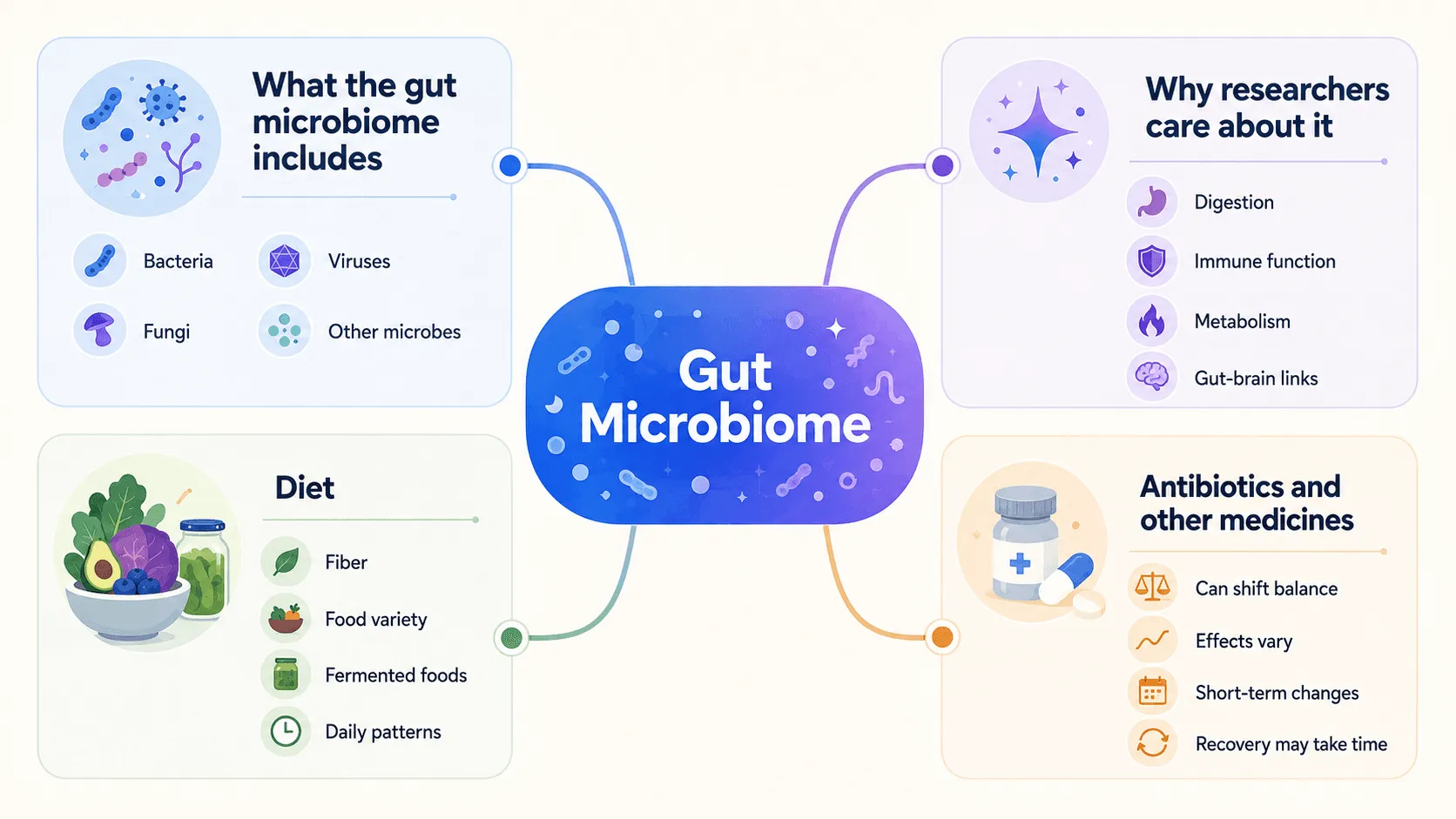
Concept Map
- What the gut microbiome includes: Your digestive tract is not sterile.
- Why researchers care about it: The Human Microbiome Project helped map microbial communities in and on healthy people and made data available for researchers.
- Diet: Diet is one of the most changeable inputs.
- Antibiotics and other medicines: Antibiotics can be necessary and sometimes lifesaving, but they can also disturb microbial communities.
Use the map to choose the section that matches your current question instead of reading every topic as a single diagnosis or treatment plan.
Related Tools and Guides
- Try the Gut Health Score
- Best Foods to Support a Healthy Gut Microbiome
- Fermented Foods vs Probiotic Supplements: Which Is Better for Gut Health?
- How to Start a Gut-Friendly Diet Without Overcomplicating It
- Best Fiber Supplements for Constipation and Gut Health
- Best Prebiotic Supplements for Gut Health
Medical Disclaimer
This article is for educational purposes only and does not provide medical advice, diagnosis, or treatment. Work with a qualified healthcare professional for persistent symptoms, diagnosed gastrointestinal disease, medication questions, or interpretation of medical tests.
Sources
Continue with a focused next step
Move from understanding this topic to one practical action, goal, or supporting guide.
Related guide
Best Foods to Support a Healthy Gut Microbiome
Cut through superfood hype and discover the top foods for gut health. Learn the 3 functional pillars to nourish gut microbes and support smooth digestion.
Read guideRelated guide
Fermented Foods vs Probiotic Supplements: Which Is Better for Gut Health?
Fermented foods feed daily diversity while probiotics deliver targeted strains. Learn which fits your gut, histamine risks, and how to optimize your microbiome.
Read guideHealth goal
How to Start a Gut-Friendly Diet Without Overcomplicating It
Tired of afternoon bloating? Repair your gut microbiome, boost short-chain fatty acids, and eliminate digestive distress with our 4-step restoration guide.
View goalResearch & transparency
We explain the evidence context, keep recommendations proportional, and identify uncertainty where it matters.
When to seek professional support
This page is educational and cannot diagnose a condition. Seek qualified care for severe, persistent, or worsening symptoms.
- Symptoms are severe, sudden, or worsening
- The concern persists despite reasonable self-care
- You are pregnant, taking medication, or managing a condition