
Why Your Gut Feels Worse When You’re Stressed
Quick answer
Your gut can feel worse under stress because the digestive tract and brain are connected by nerves, hormones, immune signals, and learned responses. Stress may alter bowel contractions, appetite, pain sensitivity, sleep, and eating behavior. The result can be bloating, cramps, nausea, diarrhea, constipation, or upper-abdominal discomfort.
That explanation does not make the symptoms imaginary, and it does not diagnose IBS. IBS is a defined disorder of gut-brain interaction involving repeated abdominal pain and changes in bowel movements without visible damage in the digestive tract. Other diseases can produce similar symptoms, so persistent or concerning changes need medical assessment.
What the Gut-Brain Connection Actually Means
The digestive system has its own network of nerves, called the enteric nervous system, and it exchanges signals with the brain and spinal cord. Nerves help control gut muscle contractions and digestive secretions. Hormones from the stomach and small intestine also communicate about hunger, fullness, and digestion.
When the brain detects a threat or heavy demand, the stress response shifts attention and resources toward immediate action. Digestion may become less predictable. For one person, bowel movement speeds up and causes urgency. For another, it slows and contributes to constipation. A more alert brain may also pay greater attention to stretching, gas, or contractions that would be easier to ignore on a calm day.
The relationship runs both ways. Repeated pain or unpredictable bowel symptoms can create worry about meals, bathrooms, commuting, and social plans. That worry can heighten vigilance and make the next episode feel more threatening. Breaking this loop requires respect for both the digestive symptoms and the stress response.
Common Stress-Linked Patterns
Stress may be part of the pattern when symptoms reliably rise around deadlines, travel, conflict, caregiving, poor sleep, or major change. Possible patterns include:
- bowel urgency or diarrhea before a high-pressure event
- constipation during prolonged stress or disrupted routines
- bloating or cramps that feel stronger when anxious
- nausea, early fullness, or reduced appetite
- eating quickly, skipping meals, or relying on more caffeine
- symptoms improving when sleep and routine stabilize
These observations are clues, not proof of a diagnosis. Food poisoning, celiac disease, inflammatory bowel disease, medicine effects, thyroid problems, lactose intolerance, and other conditions can overlap with stress-related symptoms.
IBS and Stress Are Related, but Not Identical
Stress does not mean a person automatically has IBS, and IBS is not simply "stress in the stomach." NIDDK describes IBS as a group of symptoms that includes repeated abdominal pain and a change in bowel movements. Doctors diagnose it from the symptom pattern, medical and family history, examination, and sometimes tests used to rule out other causes.
People with IBS may have a gut that is more sensitive or bowel muscles that contract differently. Stress can aggravate that system, but it is only one part of the condition. Treatment may include dietary changes, medicines, physical activity, sleep, and mental health therapies. The right combination depends on whether constipation, diarrhea, pain, or another symptom is dominant.
Avoid diagnosing yourself from a stressful month. If abdominal pain and bowel changes keep returning, a clinician can assess the pattern and check for warning signs.
A Practical Response Plan
During an acute episode
Reduce the immediate rush. Sit down, loosen tight clothing, and slow your breathing without forcing unusually deep breaths. Sip fluid if you can tolerate it. If you have bowel urgency, give yourself access to a bathroom rather than trying to suppress it through a long meeting or commute.
Do not treat severe pain, repeated vomiting, bloody stool, or dehydration as a stress episode. Those symptoms need medical attention.
Around meals
Stress often changes eating before it changes food choice. Try to sit for meals, take smaller bites, and avoid waiting until you are extremely hungry. A very large meal after hours without food may be harder to tolerate than a normal portion eaten calmly.
Keep caffeine, alcohol, carbonated drinks, and high-fat meals within amounts that do not clearly aggravate your symptoms. Do not remove multiple food groups without a reason. Restriction can make nutrition and social eating harder while leaving the real trigger unresolved.
Across the week
Protect a few repeatable anchors: a reasonably consistent wake time, regular opportunities to eat, movement that suits your health, and a short period without work or screens before bed. These habits will not remove every stressor or treat a digestive disease, but they can reduce the routine disruption that often travels with stress.
Track only what you will use. A brief note on stress, sleep, meals, stool pattern, pain, and bloating can reveal whether symptoms follow a repeatable sequence. Review trends rather than scoring your body all day.
When Psychological Treatment Helps the Gut
Psychological care is appropriate when anxiety, trauma, chronic stress, or fear of symptoms is maintaining the cycle. It is also an evidence-based part of care for some disorders of gut-brain interaction.
NIDDK lists cognitive behavioral therapy, gut-directed hypnotherapy, and relaxation training among mental health therapies doctors may recommend for IBS. These approaches do not claim that symptoms are invented. They aim to change stress responses, coping, and the brain's interpretation of gut signals.
If stress affects work, relationships, sleep, or eating, seek help even if the digestive diagnosis is still being clarified. A primary care clinician, gastroenterologist, and mental health professional can address different parts of the same problem.
Supplements Are Not the Foundation
It is tempting to respond to stress-related symptoms with probiotics, magnesium, digestive enzymes, or multi-ingredient "gut calming" products. None can diagnose the cause, and each can produce unwanted effects.
Probiotic findings in IBS are inconsistent and depend on the organism and product. Magnesium supplements may loosen stool. Peppermint oil has limited evidence for short-term relief of some IBS symptoms but may cause side effects or worsen reflux. Discuss supplements with a clinician or pharmacist when you take medicines, are pregnant, have a weakened immune system, or have a diagnosed digestive condition.
When to Seek Medical Care
Make an appointment if pain or bowel changes persist, recur often, or interfere with eating, sleep, work, or leaving home. Tell the clinician about the relationship to stress, but also share medicines, recent infections or antibiotics, family history, weight changes, and the appearance and frequency of stool.
Seek prompt care for rectal bleeding, blood in the stool or black stools, unintentional weight loss, anemia, fever, repeated vomiting, severe or worsening pain, dehydration, or an inability to pass stool or gas. Symptoms that regularly wake you from sleep also warrant medical review.
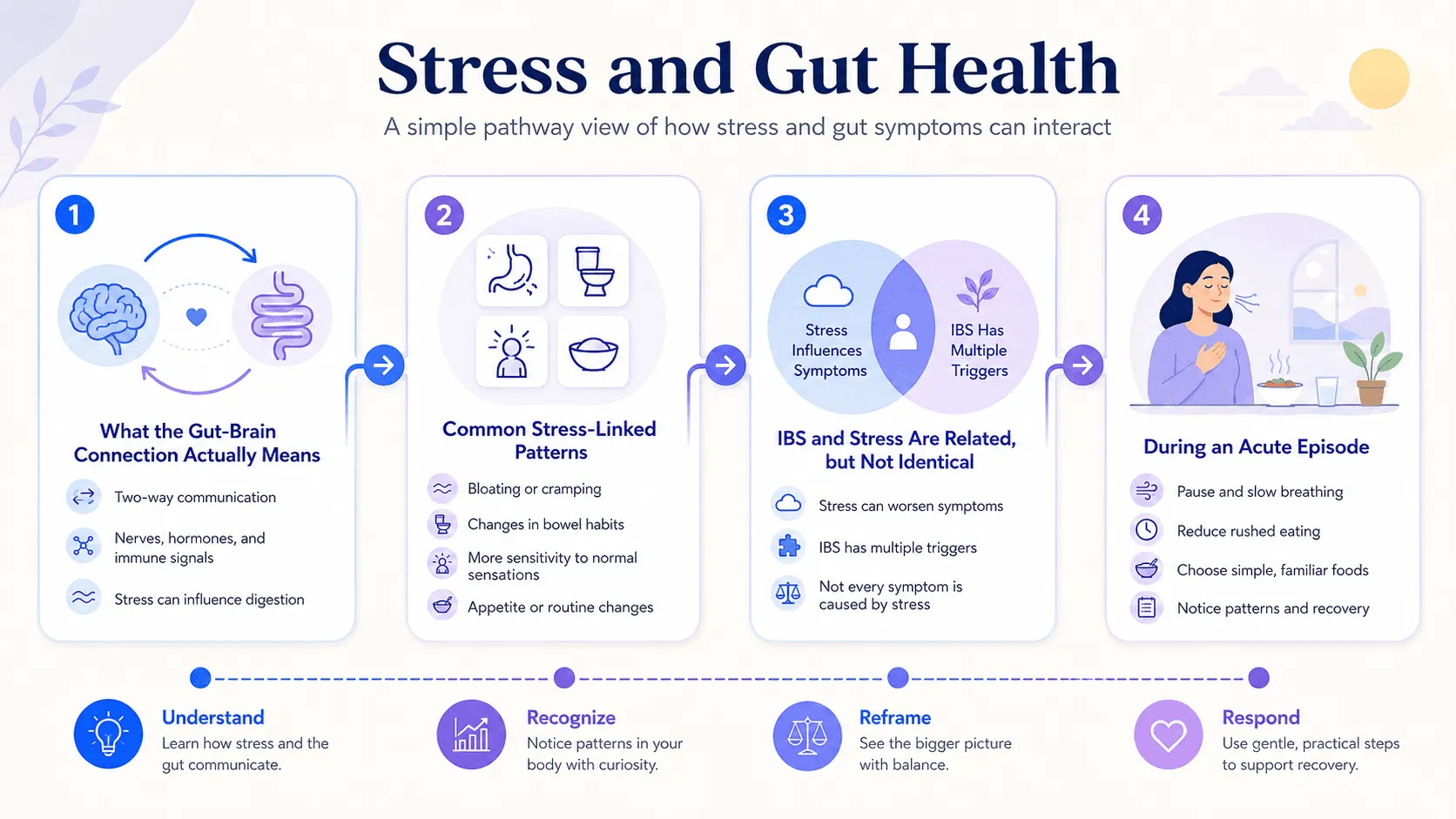
Mechanism Map
The article can be read as a simple pathway:
- What the Gut-Brain Connection Actually Means: The digestive system has its own network of nerves, called the enteric nervous system, and it exchanges signals with the brain…
- Common Stress-Linked Patterns: Stress may be part of the pattern when symptoms reliably rise around deadlines, travel, conflict, caregiving, poor sleep, or…
- IBS and Stress Are Related, but Not Identical: Stress does not mean a person automatically has IBS, and IBS is not simply "stress in the stomach." NIDDK describes IBS as a…
- During an acute episode: Reduce the immediate rush.
This pathway explains a plausible connection; it does not prove that one factor is the only cause for every person.
Related Tools and Guides
- Try the Gut Health Score
- Fermented Foods vs Probiotic Supplements: Which Is Better for Gut Health?
- How to Start a Gut-Friendly Diet Without Overcomplicating It
- Best Fiber Supplements for Constipation and Gut Health
- Best Prebiotic Supplements for Gut Health
- Best Foods to Support a Healthy Gut Microbiome
Medical Disclaimer
This article is for educational purposes only. It does not provide medical advice, diagnosis, or treatment, and it should not be used to label new digestive symptoms as stress or IBS. A qualified healthcare professional can evaluate persistent or concerning symptoms.
Sources
Continue with a focused next step
Move from understanding this topic to one practical action, goal, or supporting guide.
Related guide
Fermented Foods vs Probiotic Supplements: Which Is Better for Gut Health?
Fermented foods feed daily diversity while probiotics deliver targeted strains. Learn which fits your gut, histamine risks, and how to optimize your microbiome.
Read guideHealth goal
How to Start a Gut-Friendly Diet Without Overcomplicating It
Tired of afternoon bloating? Repair your gut microbiome, boost short-chain fatty acids, and eliminate digestive distress with our 4-step restoration guide.
View goalRelated guide
Best Fiber Supplements for Constipation: Compare 4 Options
Compare psyllium, Metamucil, Citrucel and Benefiber for constipation. See evidence, label differences, bloating cautions and when to seek care.
Read guideResearch & transparency
We explain the evidence context, keep recommendations proportional, and identify uncertainty where it matters.
When to seek professional support
This page is educational and cannot diagnose a condition. Seek qualified care for severe, persistent, or worsening symptoms.
- Symptoms are severe, sudden, or worsening
- The concern persists despite reasonable self-care
- You are pregnant, taking medication, or managing a condition