
Can Stress Cause Bloating and Digestive Problems?
Quick answer
Stress can contribute to bloating, but it is not the only possible cause. The brain and digestive tract communicate in both directions. During a stressful period, gut movement may speed up or slow down, normal amounts of gas may feel more uncomfortable, and changes in breathing or eating can increase swallowed air. These effects are physical, not imaginary.
The pattern still needs context. Bloating can also be related to constipation, lactose or other carbohydrate intolerance, celiac disease, an infection, medicines, small intestinal bacterial overgrowth, or another digestive condition. A stressful week may expose a sensitive gut; it should not become a blanket explanation for every new symptom.
How Stress Can Make Bloating Worse
Gut movement can change
Stress activates nervous-system and hormonal responses that can alter motility, the movement of food, gas, and stool through the digestive tract. Some people develop urgency or loose stools. Others become constipated. Slower transit can make gas and stool harder to move, while faster transit can bring cramping and urgency.
The gut may feel more sensitive
Bloating is the sensation of abdominal fullness or pressure. Distention is a visible increase in abdominal size. They often overlap, but not everyone who feels bloated has measurable distention.
Disorders of gut-brain interaction, including IBS, can make the gut more sensitive and change bowel contractions. That means an ordinary amount of stretching or gas may feel unusually painful or urgent. Stress can turn up attention to those signals without creating extra gas.
Breathing and eating behavior can add gas
Gas enters the digestive tract partly through swallowed air and partly when bacteria in the large intestine break down carbohydrates that were not fully digested earlier. Eating or drinking quickly, chewing gum, drinking carbonated beverages, and smoking can increase swallowed air.
Stress often changes several of these behaviors at once. A rushed meal may be larger, faster, higher in fat, or followed by more caffeine. Someone may skip lunch, then eat heavily late at night. These details can explain more than the abstract label "stress."
Look for a Repeatable Pattern
Stress is more likely to be contributing when bloating rises during deadlines, conflict, travel, poor sleep, or anxiety and eases when the pressure passes. It may also appear with other stress-linked changes, such as bowel urgency before a meeting, constipation during travel, eating quickly, or clenching the abdomen.
Use a short, simple log. Record:
- when bloating starts and whether the abdomen visibly expands
- meals, drinks, and eating speed
- stool frequency and consistency
- stress and sleep quality
- medicines, supplements, and menstrual-cycle timing when relevant
Do not use the log to label dozens of foods as unsafe after one reaction. Look for the same pattern more than once. If symptoms occur regardless of stress, wake you from sleep, or steadily worsen, broaden the investigation.
What to Do During a Bloating Episode
First, stop forcing more food or supplements into an uncomfortable stomach. Loosen tight clothing, sit upright, and allow time for the episode to settle. A gentle walk may help some people move gas and stool, provided exercise is safe for them. Intense exercise immediately after a large meal is not necessary.
Slow breathing can reduce the sense of alarm and may help release unnecessary abdominal tension. It is not a cure for gas or an underlying disease. Think of it as one way to reduce the stress response while the digestive system does its work.
If constipation is part of the pattern, hydration, movement, and gradual dietary fiber may help. Increase fiber carefully: a sudden increase can produce more gas and worsen bloating. People with significant pain, recurrent constipation, or suspected IBS should discuss a tailored approach with a clinician or registered dietitian.
Change the Conditions Around Meals
Try one or two practical changes rather than a restrictive cleanse or "gut reset":
- sit down for meals instead of eating while rushing
- take smaller bites and pause before a second serving
- keep meal timing reasonably predictable
- limit carbonated drinks or gum if they clearly increase air swallowing
- notice whether very large or high-fat meals worsen fullness
- keep caffeine and alcohol within amounts that do not aggravate symptoms
These steps are experiments, not permanent rules. The aim is to find the smallest change that reliably improves comfort while preserving a varied diet.
If a specific carbohydrate seems to trigger symptoms repeatedly, a clinician can assess possibilities such as lactose intolerance or celiac disease. A low-FODMAP diet can help some people with diagnosed IBS, but it is a structured, temporary elimination and reintroduction process, ideally guided by a dietitian. It should not become an indefinite list of forbidden foods.
Stress Care Can Be Part of Digestive Care
For frequent symptoms, work on the stressor and the digestive pattern at the same time. Regular sleep, physical activity that suits your health, predictable meals, and time to decompress can reduce avoidable triggers. If anxiety or chronic stress is substantial, therapy is not an admission that the symptoms are "all psychological." It can treat one part of a real gut-brain loop.
NIDDK includes mental health therapies among treatments clinicians may use for IBS. Gut-directed hypnotherapy and relaxation training are examples. Evidence does not mean every person with occasional bloating needs therapy; it means gut-brain treatment is a legitimate option when symptoms fit a disorder of gut-brain interaction.
Be Careful With Supplements
There is no universal supplement for stress-related bloating. Probiotic results in IBS are inconsistent, and effects cannot be generalized across strains or products. Magnesium can cause diarrhea in some forms and doses. Digestive enzymes help only when they match a specific digestive problem.
Enteric-coated peppermint oil has limited short-term evidence for some IBS symptoms, but it can cause side effects and may aggravate reflux. Ask a clinician or pharmacist before using it if you have reflux, take medicines, are pregnant, or have an existing condition. Supplements should not delay evaluation of persistent or worsening symptoms.
When to Seek Medical Care
Arrange medical review if bloating is frequent, painful, newly persistent, or interfering with eating and daily life. Seek prompt care for severe or constant abdominal pain, repeated vomiting, fever, blood in the stool or black stools, unintentional weight loss, dehydration, a swollen abdomen with inability to pass stool or gas, or diarrhea that is frequent or prolonged.
Symptoms that begin after antibiotics, occur with anemia or unusual fatigue, or repeatedly wake you from sleep also deserve attention. A clinician can review the full pattern and decide whether testing is needed. Do not self-diagnose IBS, SIBO, food intolerance, or a "damaged microbiome" from bloating alone.
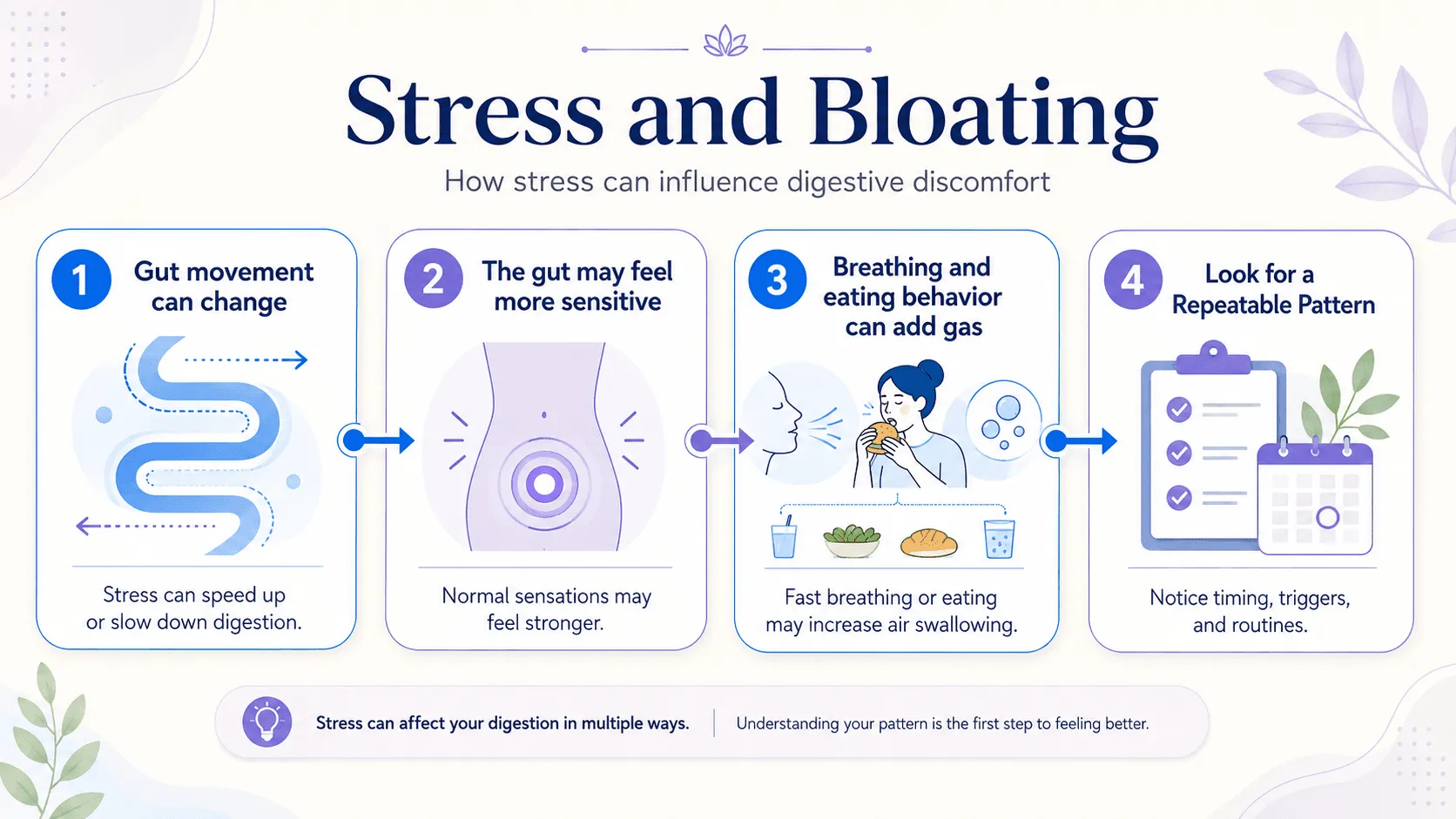
Mechanism Map
The article can be read as a simple pathway:
- Gut movement can change: Stress activates nervous-system and hormonal responses that can alter motility, the movement of food, gas, and stool through the…
- The gut may feel more sensitive: Bloating is the sensation of abdominal fullness or pressure.
- Breathing and eating behavior can add gas: Gas enters the digestive tract partly through swallowed air and partly when bacteria in the large intestine break down…
- Look for a Repeatable Pattern: Stress is more likely to be contributing when bloating rises during deadlines, conflict, travel, poor sleep, or anxiety and eases…
This pathway explains a plausible connection; it does not prove that one factor is the only cause for every person.
Related Tools and Guides
- Try the Gut Health Score
- Best Supplements for Stress-Related Digestive Discomfort
- Bloating vs Gas: What’s the Difference?
- Best Probiotics for Digestive Support
- Best Probiotics for Bloating: What to Look For Before You Buy
- Why Do I Feel Bloated After Eating?
Medical Disclaimer
This article is for educational purposes only and does not provide medical advice, diagnosis, or treatment. Persistent, severe, or concerning digestive symptoms should be evaluated by a qualified healthcare professional.
Sources
Continue with a focused next step
Move from understanding this topic to one practical action, goal, or supporting guide.
Related guide
Best Supplements for Stress-Related Digestive Discomfort
Discover top supplements for stress-related gut discomfort and digestive sensitivity. Compare peppermint oil, fiber, and soothing herbs with safety tips.
Read guideRelated guide
Bloating vs Gas: What’s the Difference?
Gas is physical air, but bloating is trapped pressure or gut sensitivity. Learn the real root causes and follow a 4-step plan to relieve tightness.
Read guideRelated guide
Best Probiotics for Digestive Support
Review strain-specific probiotic supplements for overall digestive health. Compare evidence, CFU counts, label transparency, and trial protocols.
Read guideResearch & transparency
We explain the evidence context, keep recommendations proportional, and identify uncertainty where it matters.
When to seek professional support
This page is educational and cannot diagnose a condition. Seek qualified care for severe, persistent, or worsening symptoms.
- Symptoms are severe, sudden, or worsening
- The concern persists despite reasonable self-care
- You are pregnant, taking medication, or managing a condition