
Can Probiotics Help With Bloating?
Quick answer
Some studies suggest probiotics may help selected people with bloating, especially when it overlaps with IBS-like symptoms, irregular bowel habits, or recent antibiotic-related digestive changes. They can also do nothing, or make bloating worse, when the main driver is constipation, food intolerance, high-FODMAP intake, slow gut movement, or suspected small intestinal bacterial overgrowth (SIBO).
The safest way to think about probiotics is not "more good bacteria equals less bloating." A better approach is to identify your bloating pattern, choose one strain-specific product or food at a time, start low, track symptoms, and get medical evaluation for red flags.
Why Bloating Happens
Bloating is a feeling of fullness, tightness, pressure, or swelling in the abdomen. Distention means the abdomen is visibly larger. NIDDK notes that only some people with bloating also have visible distention.
Gas can come from swallowed air and from bacteria breaking down carbohydrates that were not fully digested earlier in the gut. That is normal. The problem starts when gas, stool, gut sensitivity, motility, or an underlying condition makes the sensation frequent, painful, or disruptive.
Common contributors include:
- Constipation or incomplete emptying
- Large sudden increases in fiber
- Fermentable carbohydrates such as some FODMAP foods
- Lactose or fructose intolerance
- IBS or other gut-brain interaction disorders
- Recent antibiotics
- Stress and visceral sensitivity
- SIBO or another digestive condition
Because the causes differ, one probiotic product cannot be the answer for everyone.
How Probiotics Might Help
Probiotics are live microorganisms intended to provide a health benefit when consumed in adequate amounts. In bloating, the possible benefit is usually indirect.
Some strains may help certain people by supporting stool regularity, influencing fermentation patterns, or reducing IBS-like global symptoms. NCCIH summarizes that probiotics may have beneficial effects on global IBS symptoms and abdominal pain, but researchers still cannot name one best species, strain, or combination for everyone.
That uncertainty matters. A product that helped in one trial does not prove that every "digestive probiotic" will help your bloating.
When Probiotics Are More Likely to Be Worth a Careful Trial
A cautious trial may make sense if:
- Bloating began after antibiotics and severe symptoms are absent
- Bloating comes with mild irregularity rather than severe pain
- You have IBS-like symptoms and a clinician has ruled out urgent causes
- You tolerate yogurt or fermented foods and want a food-first option
- You can track symptoms without changing five other things at once
Start with one variable. If you begin a probiotic, a prebiotic powder, fermented vegetables, magnesium, and a low-FODMAP diet on the same day, you will not know what helped or hurt.
When Probiotics May Make Bloating Worse
Probiotics can increase gas or pressure in some people, especially early on or at high doses. They may be a poor first step if you are constipated, have very slow gut movement, react strongly to fermentable foods, or suspect SIBO.
Watch the ingredient list too. Some probiotic supplements include inulin, fructooligosaccharides, sugar alcohols, or other fermentable ingredients. Those can be useful for some people, but they may worsen bloating in sensitive guts.
Stop and reassess if bloating becomes stronger, more painful, more frequent, or comes with diarrhea, constipation, brain fog, fever, vomiting, or weight loss.
SIBO Makes the Question More Complicated
SIBO means an increase in the number or type of bacteria in the small intestine. AGA notes that SIBO as a clinical entity still has definition and testing challenges, and symptoms commonly linked to it include bloating, diarrhea, and abdominal discomfort. More severe cases may involve malabsorption or nutritional deficiencies.
If bloating appears quickly after meals, worsens with prebiotics, or comes with diarrhea, weight loss, nutrient deficiencies, or major food restriction, do not keep escalating probiotics on your own. A clinician can decide whether SIBO testing or evaluation for another condition is appropriate.
Some people with suspected SIBO tolerate certain probiotics. Others feel worse. That is exactly why blanket advice is risky.
How to Choose a Probiotic for Bloating
Look for specificity and tolerability:
- Genus, species, and strain are listed
- CFU count is guaranteed through expiration
- The product does not rely only on "high potency" language
- It avoids added prebiotic fibers if you already react to them
- It has storage instructions you can realistically follow
- It is matched to your symptom pattern, not just a popular brand
Food options can be gentler for some people: yogurt with live cultures, kefir, miso, tempeh, sauerkraut, or kimchi. But fermented foods can also trigger symptoms, especially in larger portions. Start with a few spoonfuls, not a full bowl.
A Careful Trial Plan
Use this as an observation plan, not a guarantee.
Step 1: Track before starting
Before starting, note meals, bloating timing, stool pattern, stress, menstrual cycle if relevant, and major triggers across a stable stretch of ordinary days. Timing matters: bloating soon after meals may point to a different pattern than bloating that builds with constipation through the day.
Step 2: Pick one product or food
Choose one probiotic supplement or one fermented food. Do not add a new prebiotic powder at the same time.
Step 3: Start low
Use a small serving. If the product format allows, begin below the label serving. Sensitive guts often do better with less.
Step 4: Watch the pattern
Some extra gas at first can happen. Clear worsening, pain, diarrhea, constipation, or new systemic symptoms is different. Stop the trial and reassess.
Step 5: Decide based on function
After the observation period you agreed on with a clinician or pharmacist, ask whether bloating, stool regularity, and daily comfort are actually better. If not, do not keep increasing the dose just because the label sounds scientific.
What Else Helps Bloating More Reliably
For many people, the basics matter more than a probiotic:
- Treat constipation first with fiber changes, fluids, movement, and clinician-approved options when needed
- Increase fiber gradually, not suddenly
- Reduce carbonated drinks, gum, and very fast eating if swallowed air is a trigger
- Test lactose, fructose, or high-FODMAP patterns with professional guidance if symptoms are persistent
- Eat regular meals instead of grazing all day if that worsens symptoms
- Manage stress and sleep because gut sensitivity can rise when the nervous system is on high alert
This is less glamorous than a supplement shelf, but it is often where the real signal is.
When to Get Medical Help
Talk with a healthcare professional if bloating bothers you, changes suddenly, or comes with abdominal pain, constipation, diarrhea, or weight loss. Seek prompt evaluation for blood in stool, black or tarry stool, persistent vomiting, fever, severe pain, anemia, difficulty swallowing, dehydration, new symptoms after age 50, ongoing diarrhea, or unexplained weight loss.
Also ask before using probiotics if you are immunocompromised, seriously ill, recently hospitalized, pregnant, caring for a premature infant, or managing a complex medical condition.
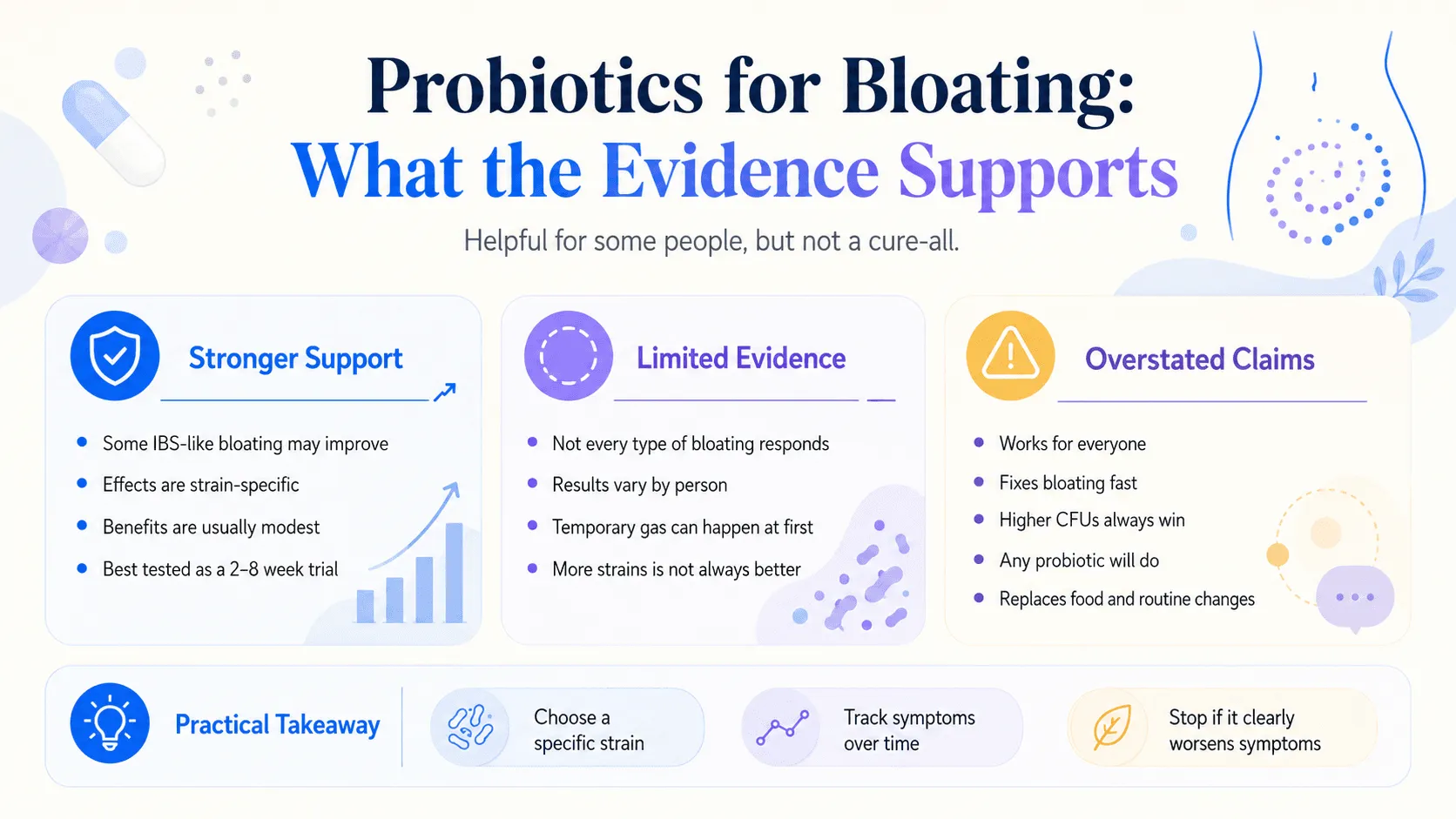
Evidence Snapshot
| Claim or area | Evidence signal | Important limit |
|---|---|---|
| Why Bloating Happens | Promising but context-dependent | Bloating is a feeling of fullness, tightness, pressure, or swelling in the abdomen. |
| How Probiotics Might Help | Promising but context-dependent | Probiotics are live microorganisms intended to provide a health benefit when consumed in adequate amounts. |
| When Probiotics Are More Likely to Be Worth a Careful Trial | Promising but context-dependent | A cautious trial may make sense if: - Bloating began after antibiotics and severe symptoms are absent - Bloating comes with mild… |
| When Probiotics May Make Bloating Worse | Promising but context-dependent | Probiotics can increase gas or pressure in some people, especially early on or at high doses. |
Mechanistic plausibility, testimonials, and a single small study should not be treated as proof of a universal result.
Related Tools and Guides
- Try the Gut Health Score
- Best Probiotics for Bloating: What to Look For Before You Buy
- Bloating vs Gas: What’s the Difference?
- Fermented Foods vs Probiotic Supplements: Which Is Better for Gut Health?
- Prebiotics vs Probiotics: What’s the Difference?
- Best Probiotics for Digestive Support
Medical Disclaimer
This article is for educational purposes only and does not provide medical advice, diagnosis, or treatment. Probiotics are not a substitute for medical evaluation. If symptoms are severe, persistent, or changing, consult a qualified healthcare professional.
Sources
Continue with a focused next step
Move from understanding this topic to one practical action, goal, or supporting guide.
Related guide
Best Probiotics for Bloating: What to Look For Before You Buy
Struggling with post-meal bloating and gas? Review top strain-specific probiotics for bloating, clinical evidence, buying checklists, and trial protocols.
Read guideRelated guide
Bloating vs Gas: What’s the Difference?
Gas is physical air, but bloating is trapped pressure or gut sensitivity. Learn the real root causes and follow a 4-step plan to relieve tightness.
Read guideRelated guide
Fermented Foods vs Probiotic Supplements: Which Is Better for Gut Health?
Fermented foods feed daily diversity while probiotics deliver targeted strains. Learn which fits your gut, histamine risks, and how to optimize your microbiome.
Read guideResearch & transparency
We explain the evidence context, keep recommendations proportional, and identify uncertainty where it matters.
When to seek professional support
This page is educational and cannot diagnose a condition. Seek qualified care for severe, persistent, or worsening symptoms.
- Symptoms are severe, sudden, or worsening
- The concern persists despite reasonable self-care
- You are pregnant, taking medication, or managing a condition