
What Your Poop Says About Your Gut Health
Quick answer
Poop can tell you useful things about digestion, but it cannot diagnose your health by itself. The most useful signs are stool form, color, ease of passing, frequency, urgency, pain, blood, and whether a change is new or persistent.
Healthy stool is usually brown, soft but formed, and easy to pass. A bowel pattern can still be normal if you do not go every day, as long as it is comfortable and consistent for you. Red flags include blood in stool, black tar-like stool, persistent pale or greasy stool, severe diarrhea, sudden severe constipation, unexplained weight loss, fever, vomiting, or major bowel changes that do not settle.
What Healthy Poop Usually Looks Like
A healthy bowel movement is usually:
- Brown
- Soft but formed
- Easy to pass
- Not painful
- Not urgent every time
- Regular for your body
- Not associated with blood or unexplained weight loss
Frequency varies. Some people have bowel movements more than once a day. Others go a few times per week. Constipation is not defined only by the number of trips to the bathroom. It can also mean hard, dry, lumpy stool, painful straining, or a feeling that stool has not fully passed.
One odd stool is usually less important than a repeated pattern. A single green stool after leafy vegetables means something different from pale, greasy stool that keeps returning with weight loss.
Stool Form: A Practical Clue
Stool form reflects how quickly waste has moved through the colon and how much water has been absorbed. The Bristol Stool Form Scale, used in research and clinical settings, groups stool into seven forms. You do not need to memorize the scale. The basic pattern is enough.
Hard pellets or hard lumpy stool often suggest slower transit. Waste spends longer in the colon, more water is absorbed, and stool becomes dry. This can happen with low fiber intake, low fluid intake, travel, low activity, pregnancy, certain medicines, or ignoring the urge to go.
Smooth, soft, formed stool is usually the easiest pattern to pass. Soft blobs or loose stool may mean faster transit, food intolerance, stress, alcohol, caffeine, infection, or a sudden diet change. Watery stool, especially several times a day, is diarrhea.
Action: if stool is hard, start with fluids, gradual fiber from food, daily movement, and a regular bathroom routine. If stool is watery, focus on hydration and watch for red flags.
Color: What Matters and What Usually Does Not
Brown is the usual stool color because bile pigments change as they move through the digestive tract.
Green stool can come from leafy greens, food coloring, iron supplements, or stool moving faster than usual. If you feel well and it happens briefly, it is usually not a crisis.
Yellow, greasy, oily, pale, or floating stool deserves more attention when it repeats. It can happen after high-fat meals, but a persistent pattern may suggest that fat is not being digested or absorbed well. This is more concerning when stool is foul-smelling, hard to flush, or paired with weight loss, fatigue, or nutrient deficiency symptoms.
Black or tar-like stool can be a sign of bleeding higher in the digestive tract, especially if it is sticky, very dark, and foul-smelling. Some iron supplements and bismuth medicines can also darken stool, but do not assume a medicine explains it if the pattern is new or you feel unwell.
Red stool can come from beets or food coloring, but visible blood should be evaluated. Bright red blood may come from hemorrhoids or fissures, yet it can also come from inflammation, infection, polyps, diverticular bleeding, or other conditions.
Action: note color, food and medicine changes, and whether blood is on the paper, coating stool, or mixed in. Seek medical care promptly for black tar-like stool, blood mixed in stool, heavy bleeding, dizziness, or weakness.
Smell, Floating, and Mucus
Stool smells because gut microbes break down food and produce gases and other compounds. A strong smell after a high-protein or high-fat meal may not mean much. A sudden, persistent, very foul smell with diarrhea, oily stool, fever, or weight loss deserves attention.
Floating stool is often caused by gas. Occasional floating stool with otherwise normal color and form is usually not a useful warning sign. Repeated floating stool that is pale, greasy, oily, difficult to flush, or very foul-smelling may point toward fat malabsorption and should be discussed with a clinician.
Small amounts of mucus can appear with irritation, constipation, or diarrhea. Ongoing mucus with blood, fever, severe pain, or persistent diarrhea should be checked.
Frequency: How Often Should You Poop?
There is no perfect number. A reasonable bowel rhythm is comfortable, consistent, and easy to pass. Going daily is not required. Going three times a day may be normal for one person, while going three times a week may be normal for another.
What matters is a sustained change from your usual pattern. More frequent loose stools, new urgency, needing to wake at night to go, sudden constipation, or a new sense of incomplete emptying can all be useful clues.
Action: compare yourself with your own baseline, not with someone else’s schedule.
Constipation Patterns
Constipation can show up as hard stool, straining, fewer bowel movements, bloating, pain with bowel movements, or feeling blocked. Common contributors include low fiber, low fluid intake, low physical activity, travel, stress, low food intake, pregnancy, and medicines such as iron or opioid pain medicines.
For mild constipation, increase fiber gradually rather than suddenly. Add water as you add fiber. Move daily if you can. Give yourself unhurried bathroom time, especially after breakfast, when the colon is often more active.
Seek medical advice if constipation is new and persistent, severe, or paired with blood in stool, constant abdominal pain, vomiting, fever, inability to pass gas, or unexplained weight loss.
Diarrhea Patterns
Diarrhea is loose or watery stool three or more times a day, or more often than normal for you. Short episodes can come from infections, food reactions, alcohol, caffeine, stress, or medicines. The main short-term risk is dehydration.
Get medical advice quickly if diarrhea includes blood or pus, black stool, severe abdominal or rectal pain, frequent vomiting, signs of dehydration, high fever, or mental status changes. Adults should also seek help if diarrhea lasts more than two days or is very frequent. Persistent diarrhea can lead to malabsorption and should be evaluated.
Action: hydrate, consider oral rehydration fluids when needed, and avoid alcohol. Do not use anti-diarrhea medicine for bloody diarrhea or fever unless a clinician says it is appropriate.
A Simple Poop Check
You do not need to inspect every bowel movement like a lab sample. A quick check is enough:
- Is it formed or watery?
- Is it easy to pass?
- Is the color expected?
- Is there blood, black tar-like stool, or persistent pale stool?
- Is this your usual pattern?
- Are there symptoms such as pain, fever, vomiting, dizziness, or weight loss?
If something changes, track it for a short time. Record stool form, frequency, pain, urgency, foods, medications, supplements, travel, antibiotics, and stress. This makes a medical visit more productive if you need one.
When to Seek Medical Help
Seek urgent care for heavy bleeding, black tar-like stool, vomiting blood, severe abdominal pain, fainting, confusion, severe dehydration, or inability to pass gas or stool with swelling and pain.
Make a medical appointment for blood in stool, repeated greasy or floating stool, persistent diarrhea, persistent constipation, unexplained weight loss, ongoing abdominal pain, fever with digestive symptoms, new bowel changes, or symptoms that keep interfering with daily life.
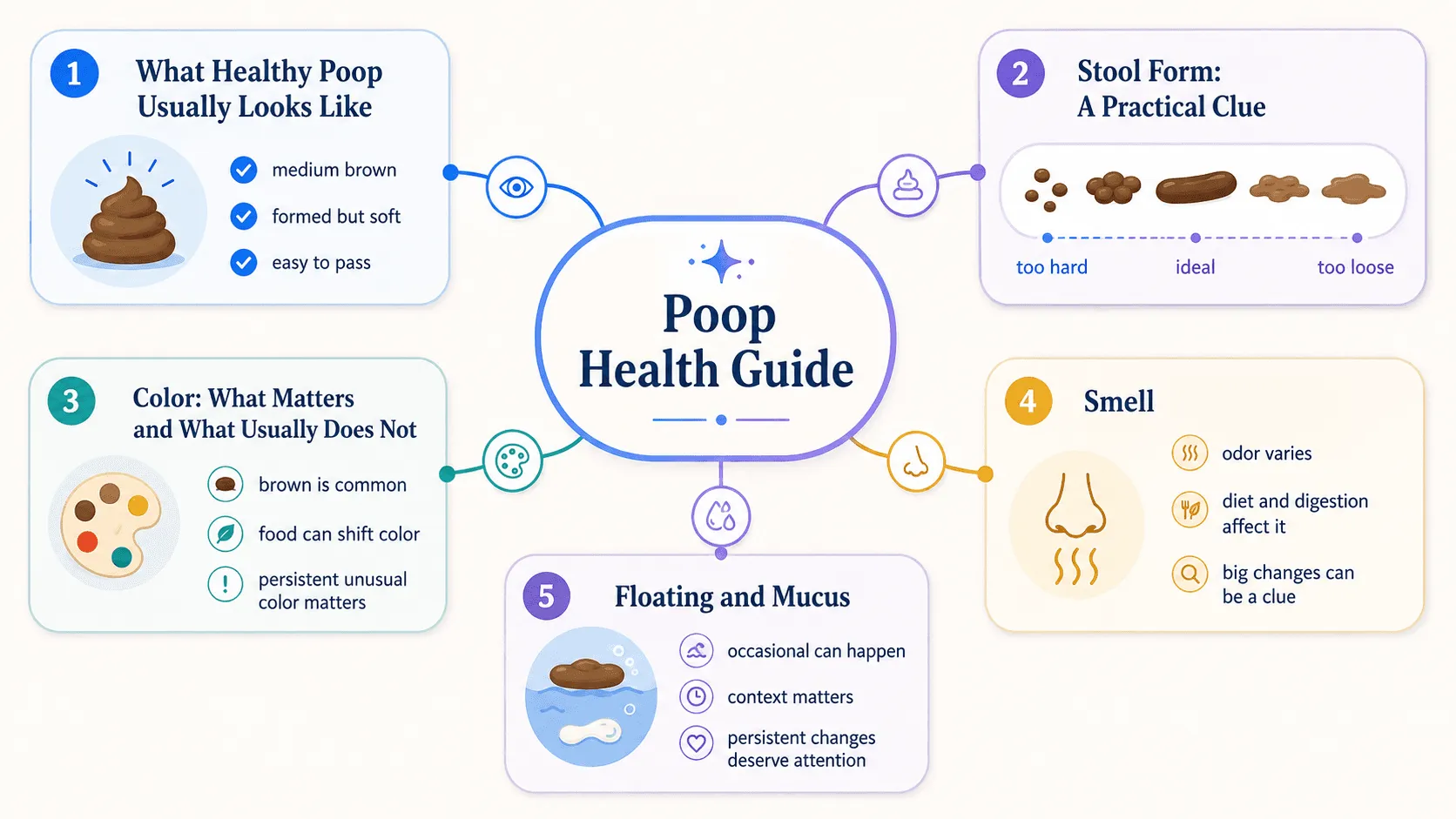
Concept Map
- What Healthy Poop Usually Looks Like: A healthy bowel movement is usually: - Brown - Soft but formed - Easy to pass - Not painful - Not urgent every time - Regular for…
- Stool Form: A Practical Clue: Stool form reflects how quickly waste has moved through the colon and how much water has been absorbed.
- Color: What Matters and What Usually Does Not: Brown is the usual stool color because bile pigments change as they move through the digestive tract.
- Smell, Floating, and Mucus: Stool smells because gut microbes break down food and produce gases and other compounds.
Use the map to choose the section that matches your current question instead of reading every topic as a single diagnosis or treatment plan.
Related Tools and Guides
- Try the Gut Health Score
- Fermented Foods vs Probiotic Supplements: Which Is Better for Gut Health?
- How to Start a Gut-Friendly Diet Without Overcomplicating It
- Best Fiber Supplements for Constipation and Gut Health
- Best Prebiotic Supplements for Gut Health
- Best Foods to Support a Healthy Gut Microbiome
Medical Disclaimer
This article is for educational purposes only and does not provide medical advice, diagnosis, or treatment. Stool changes can have many causes. If symptoms are severe, persistent, worsening, or concerning, speak with a qualified healthcare professional.
Sources
Continue with a focused next step
Move from understanding this topic to one practical action, goal, or supporting guide.
Related guide
Fermented Foods vs Probiotic Supplements: Which Is Better for Gut Health?
Fermented foods feed daily diversity while probiotics deliver targeted strains. Learn which fits your gut, histamine risks, and how to optimize your microbiome.
Read guideHealth goal
How to Start a Gut-Friendly Diet Without Overcomplicating It
Tired of afternoon bloating? Repair your gut microbiome, boost short-chain fatty acids, and eliminate digestive distress with our 4-step restoration guide.
View goalRelated guide
Best Fiber Supplements for Constipation: Compare 4 Options
Compare psyllium, Metamucil, Citrucel and Benefiber for constipation. See evidence, label differences, bloating cautions and when to seek care.
Read guideResearch & transparency
We explain the evidence context, keep recommendations proportional, and identify uncertainty where it matters.
When to seek professional support
This page is educational and cannot diagnose a condition. Seek qualified care for severe, persistent, or worsening symptoms.
- Symptoms are severe, sudden, or worsening
- The concern persists despite reasonable self-care
- You are pregnant, taking medication, or managing a condition